Executive Function Coaching for High-Performing Students
Executive function skills are the foundation of academic success. These include: planning and prioritization, scheduling and calendar management, breaking long assignments into manageable phases, managing multiple deadlines, reducing procrastination, and controlling distractions.
High-achieving students often struggle not because of a lack of ability, but because they feel overwhelmed with increasing academic pressure.
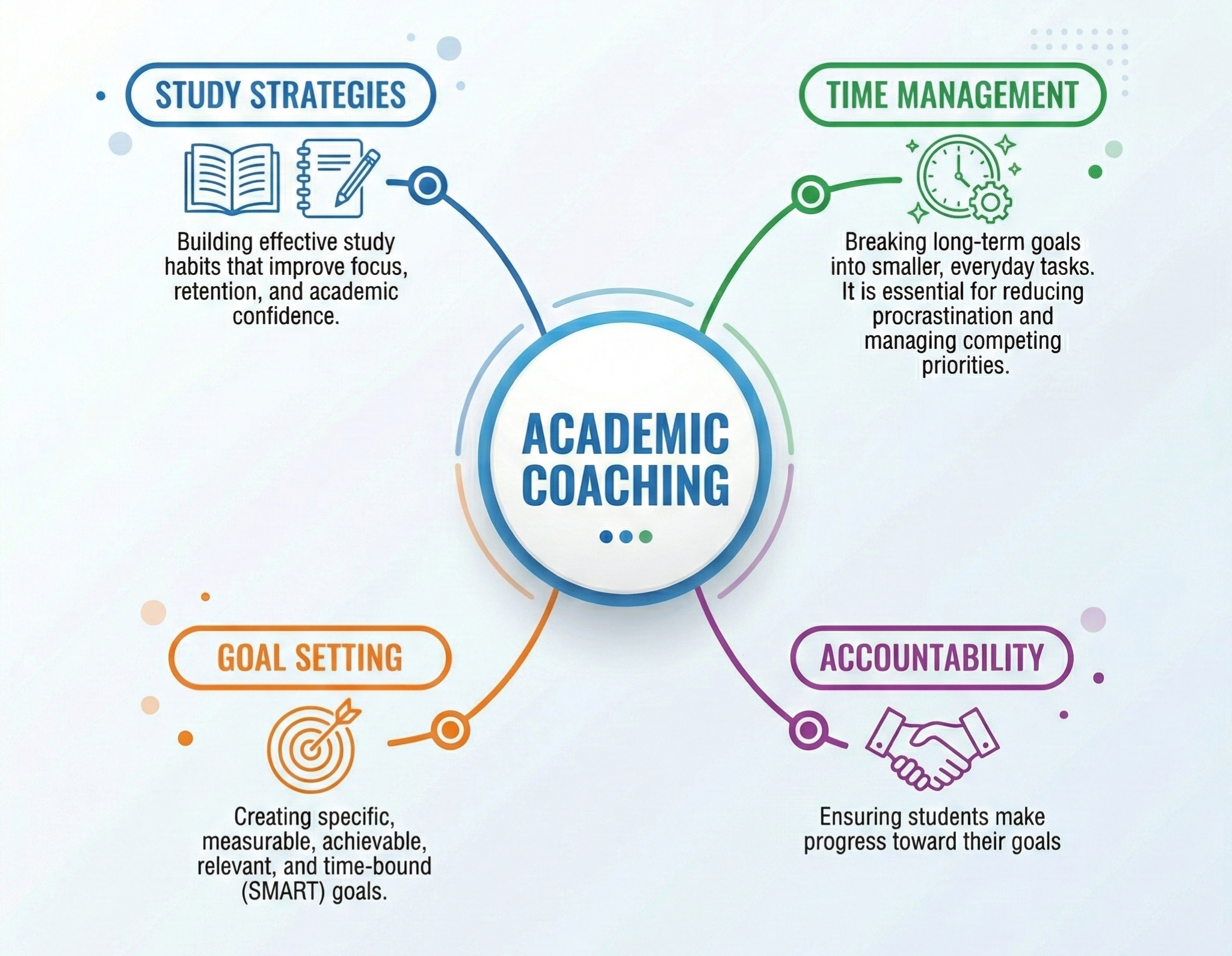
Our academic coaching program also functions as executive function coaching for teens navigating demanding high school coursework. The program includes:
- • Weekly planning sessions
- • Semester mapping
- • Strategic academic reviews
- • Performance tracking systems
How Academic Coaching Supports Private School, Boarding School, and College Admissions
When admissions officers review an application, they are not just looking for high grades. They are looking for patterns and consistency.
Admissions officers evaluate transcript strength, course rigor progression, performance consistency, teacher recommendation quality, intellectual maturity, and academic resilience. They pay attention to how rigor evolves over time, whether performance stays consistent during demanding semesters, and what teachers say about a student’s work ethic and independence. They are trying to understand something deeper than GPA. They are asking, “Is this student ready to take on more challenging coursework?”
That’s where academic coaching quietly makes a difference.
Academic coaching strengthens executive function, long-term planning, workload management, and academic consistency. Students learn how to break large assignments into manageable segments, create schedules weeks before deadlines pile up, and make thoughtful decisions about how they spend their time. Over time, these systems lessen stress by creating stability that allows strong students to perform at a high level consistently rather than in unpredictable bursts.
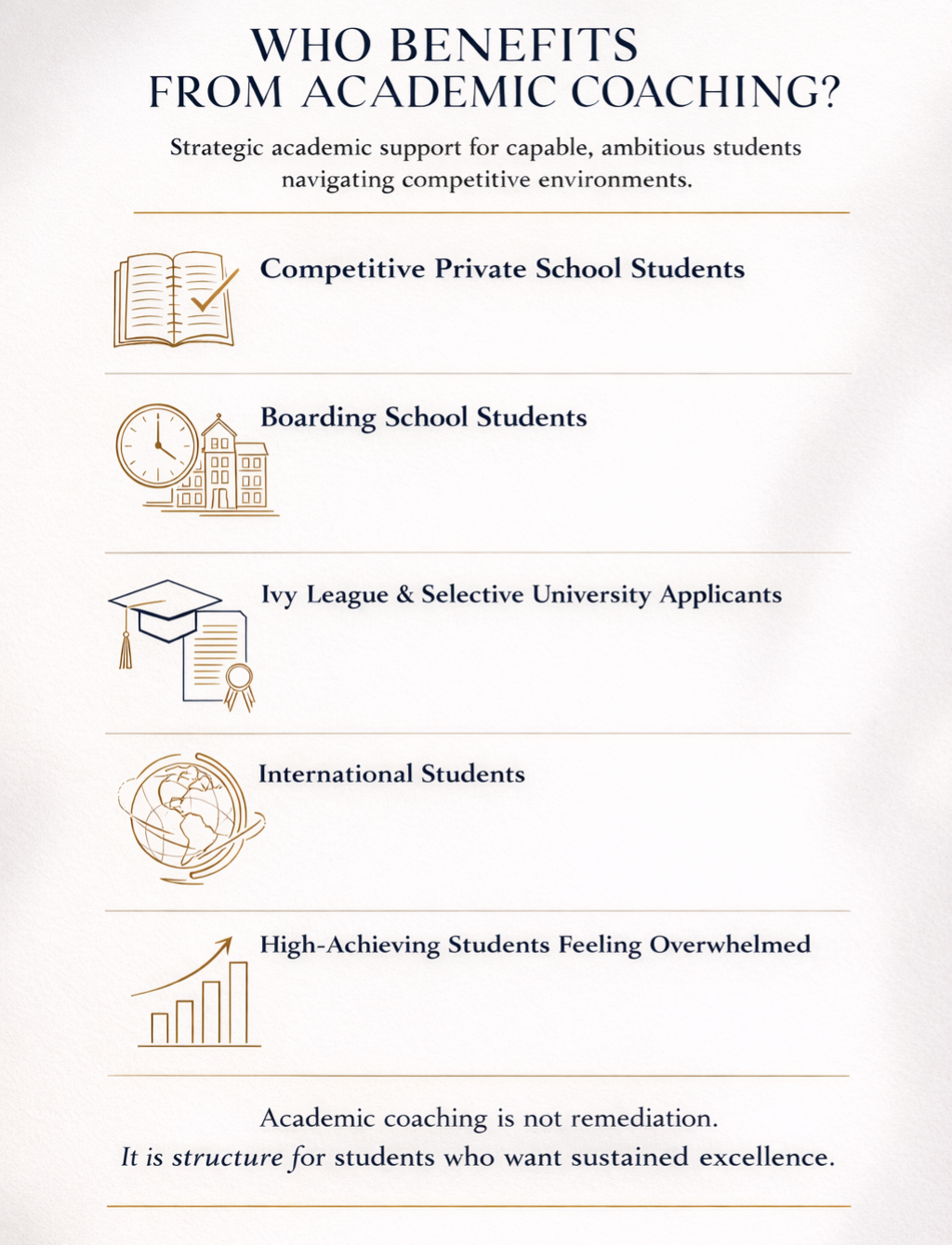
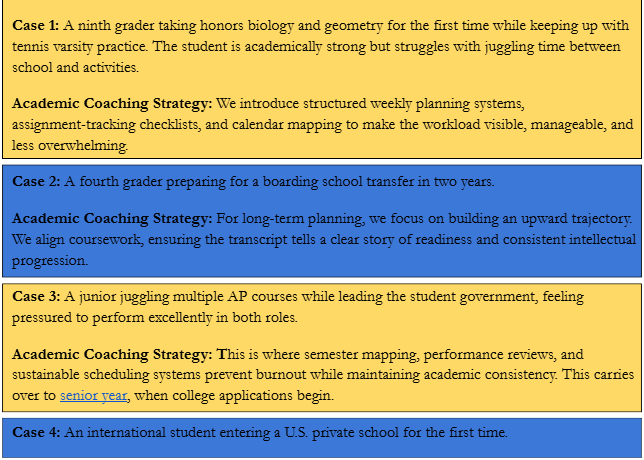
Academic coaching supports boarding school transfers, private school transitions, post-graduate boarding year planning, and college admissions preparation. A student transferring to a boarding school must show they can handle structure and freedom at the same time. A ninth grader stepping into a competitive private school needs systems that will build consistent study habits to sustain academics. A junior juggling AP classes, extracurricular activities, leadership roles, and early college planning should know how to manage their time to meet deadlines and fulfill their responsibilities.
Academic coaching builds those habits before the pressure peaks.
Families who start early are not reacting to a bad report card. They are thinking ahead. By the time application season arrives, their child’s record reflects more than strong grades. It reflects maturity, resilience, and thoughtful progression.
Admissions officers notice that. And when they see it, it stands out.